Dahlias are hard to miss once you know what you are looking at. They come in almost every color, grow in dozens of shapes, and bloom for months without much fuss.
But if you have ever stood in a garden and wondered whether that big, layered flower is actually a dahlia or something else entirely, you are not alone.
Most people cannot tell a dahlia from a zinnia or a chrysanthemum at first glance.
This guide breaks down exactly what a dahlia looks like, from the roots underground to the petals at the top. By the end, you will know how to spot one anywhere.
What Does a Dahlia Look Like? Quick Overview
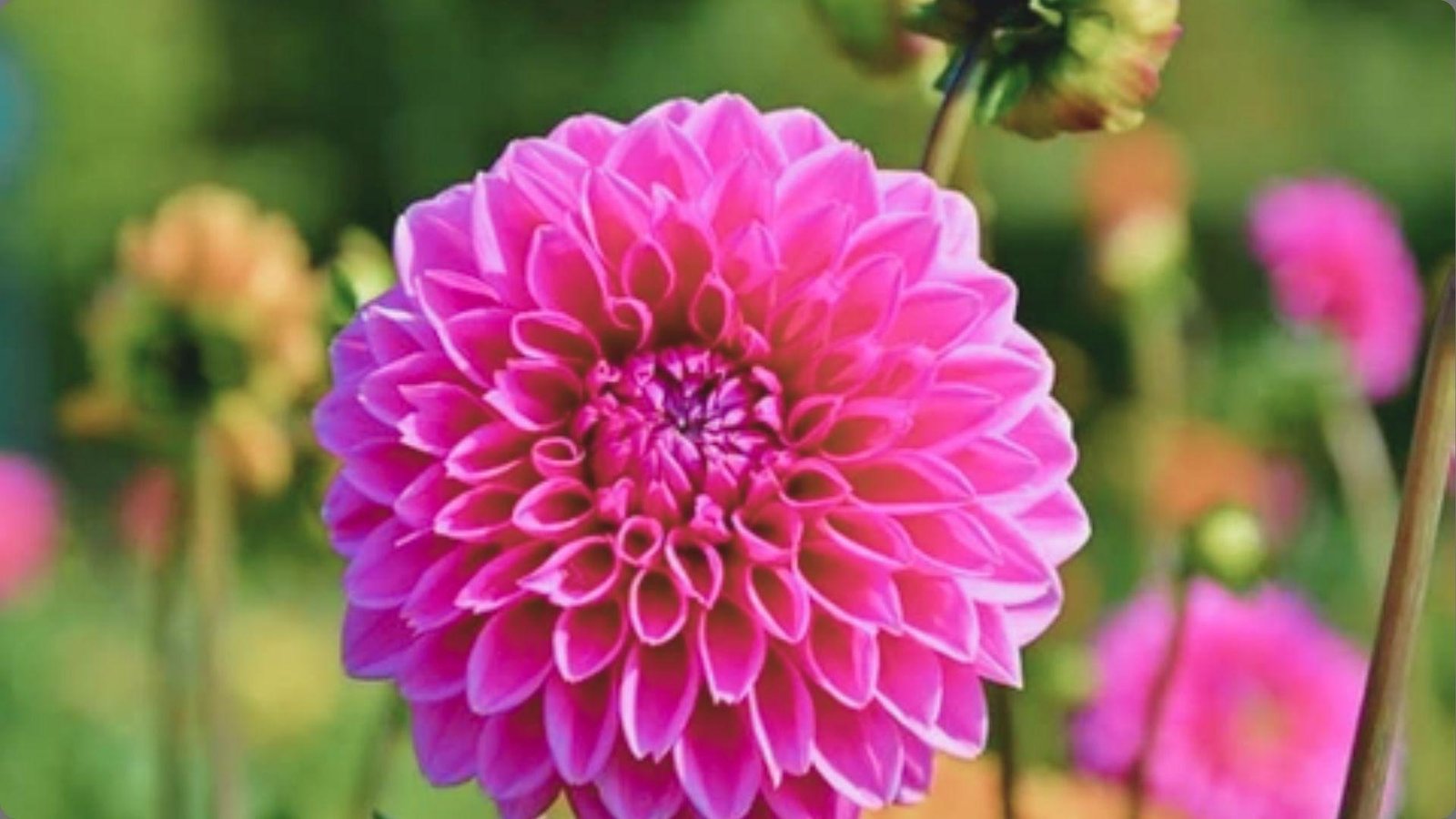
Dahlias are bold, full-bodied flowers that come in almost every color except true blue. They grow on tall, hollow stems with dark green, slightly serrated leaves.
The blooms range from small, simple buttons to large, dinner-plate-sized flowers with layered petals. Each plant grows from a tuberous root, not a bulb.
Dahlias bloom from midsummer through the first frost, making them a long-lasting garden favorite. Their variety in size, shape, and color is what keeps gardeners coming back season after season.
Dahlia Plant Structure Explained
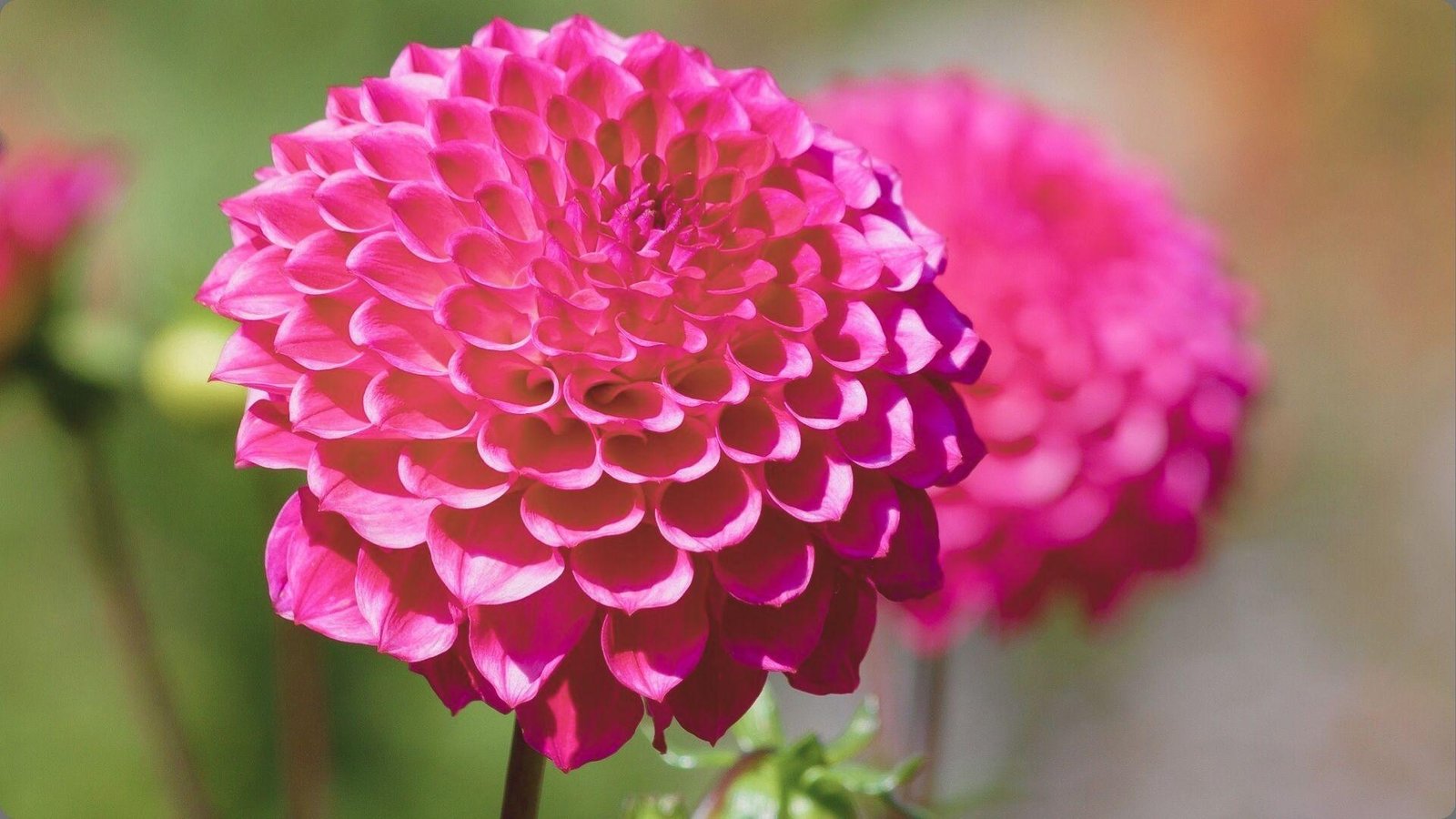
Dahlias grow from thick, fleshy tubers that look similar to sweet potatoes. These tubers sit just below the soil surface and store energy for the plant.
When spring arrives, small pink or purple sprouts push up through the ground. As the plant matures, it grows into a bushy, upright shape with strong branching stems.
Depending on the variety, a full-grown dahlia plant can reach anywhere from one foot to six feet tall by the time it flowers.
What Do Dahlia Leaves and Stems Look Like?
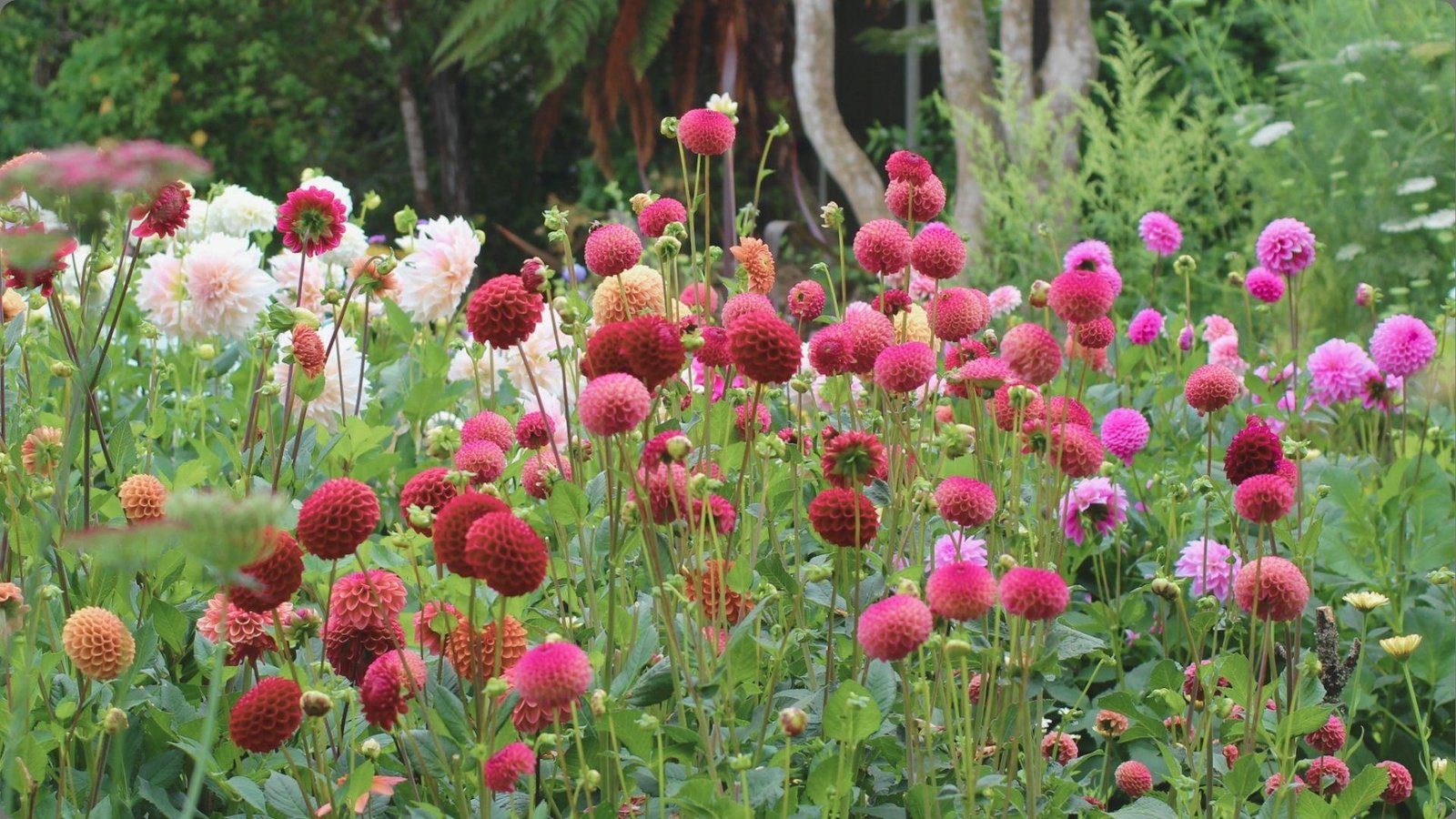
Dahlia leaves and stems have a few distinct features that make them easy to spot. Knowing what to look for helps you identify and care for the plant with confidence.
Opposite Leaf Pattern and Serrated Edges
Dahlia leaves grow in pairs directly across from each other on the stem. Each leaf has slightly jagged, serrated edges that give the plant a textured look.
The leaves are oval-shaped and pointed at the tip.
Leaf Color Variations (Green to Dark Bronze)
Most dahlias have medium to dark green leaves. Some varieties, especially darker-flowered types, carry deep bronze or burgundy foliage.
The leaf color often gives a hint about the flower color before it even blooms.
Thick, Hollow Stems and Growth Habit
Dahlia stems are thick and sturdy on the outside but hollow inside. They grow upright and branch out as the plant matures.
This hollow structure makes the stems surprisingly lightweight despite how tall the plant grows.
Why Dahlia Plants Often Need Support
Because dahlias can grow very tall and produce heavy blooms, the stems can bend or snap under their own weight.
A simple garden stake or cage placed early in the growing season keeps the plant upright and protects it from wind damage.
What Do Dahlia Flowers Look Like?
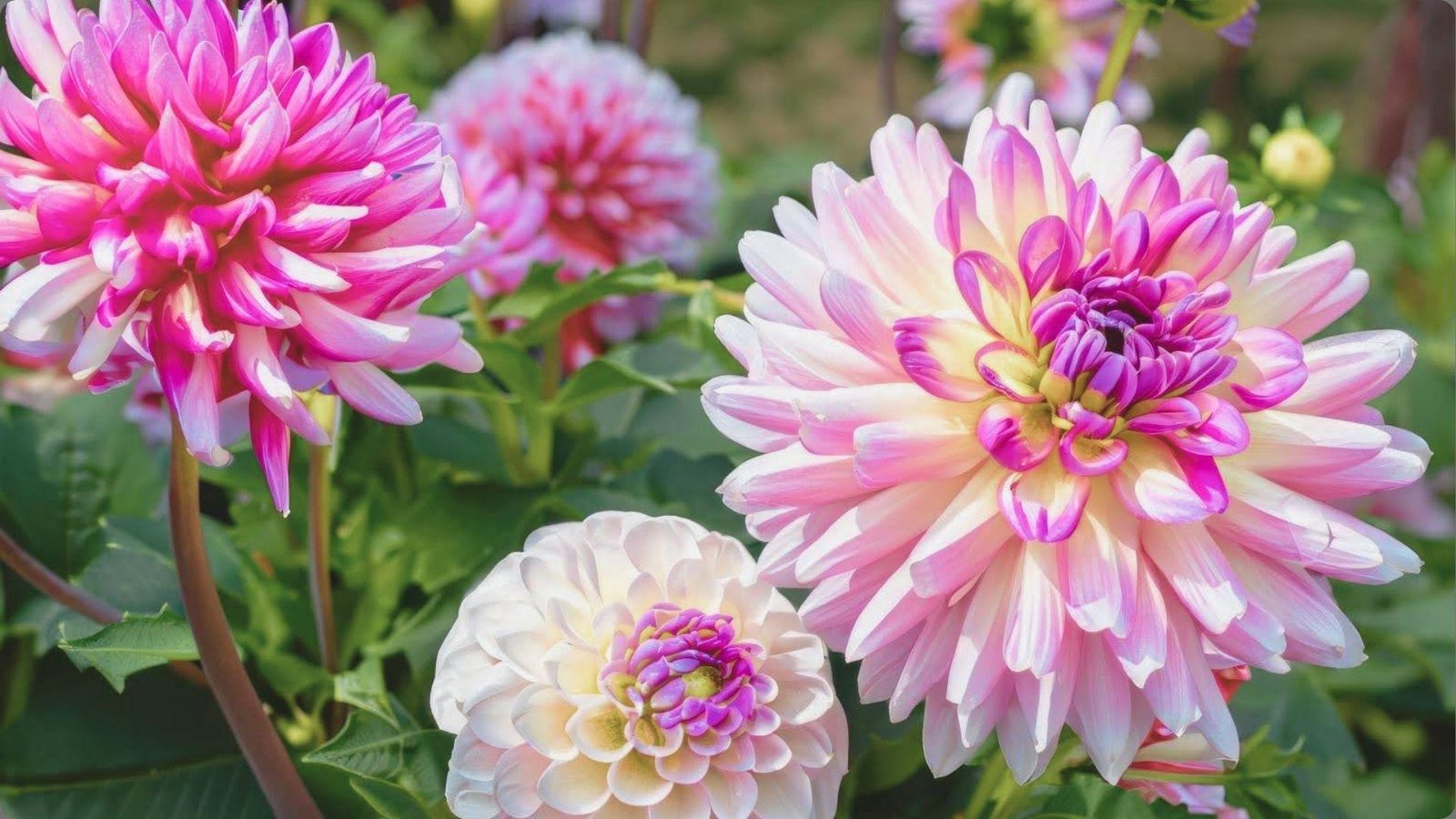
Dahlia flowers come in a wide range of shapes and sizes, from tight round balls to large, flat blooms. Each flower type has its own distinct look that sets it apart from the rest.
Understanding Dahlia Flower Structure
A dahlia flower is made up of two parts. The outer petals, called ray florets, surround a central disc. In some varieties, the disc is visible.
In others, it is completely covered by layers of tightly packed petals. The number and arrangement of these petals define the flower type.
Decorative and Dinnerplate Dahlias
Decorative dahlias have fully double blooms with broad, flat petals arranged in a spiral pattern.
Dinnerplate dahlias are a larger version of this, with blooms that can reach up to 12 inches across. Both types are showstoppers in any garden setting.
Ball and Pompon Dahlias
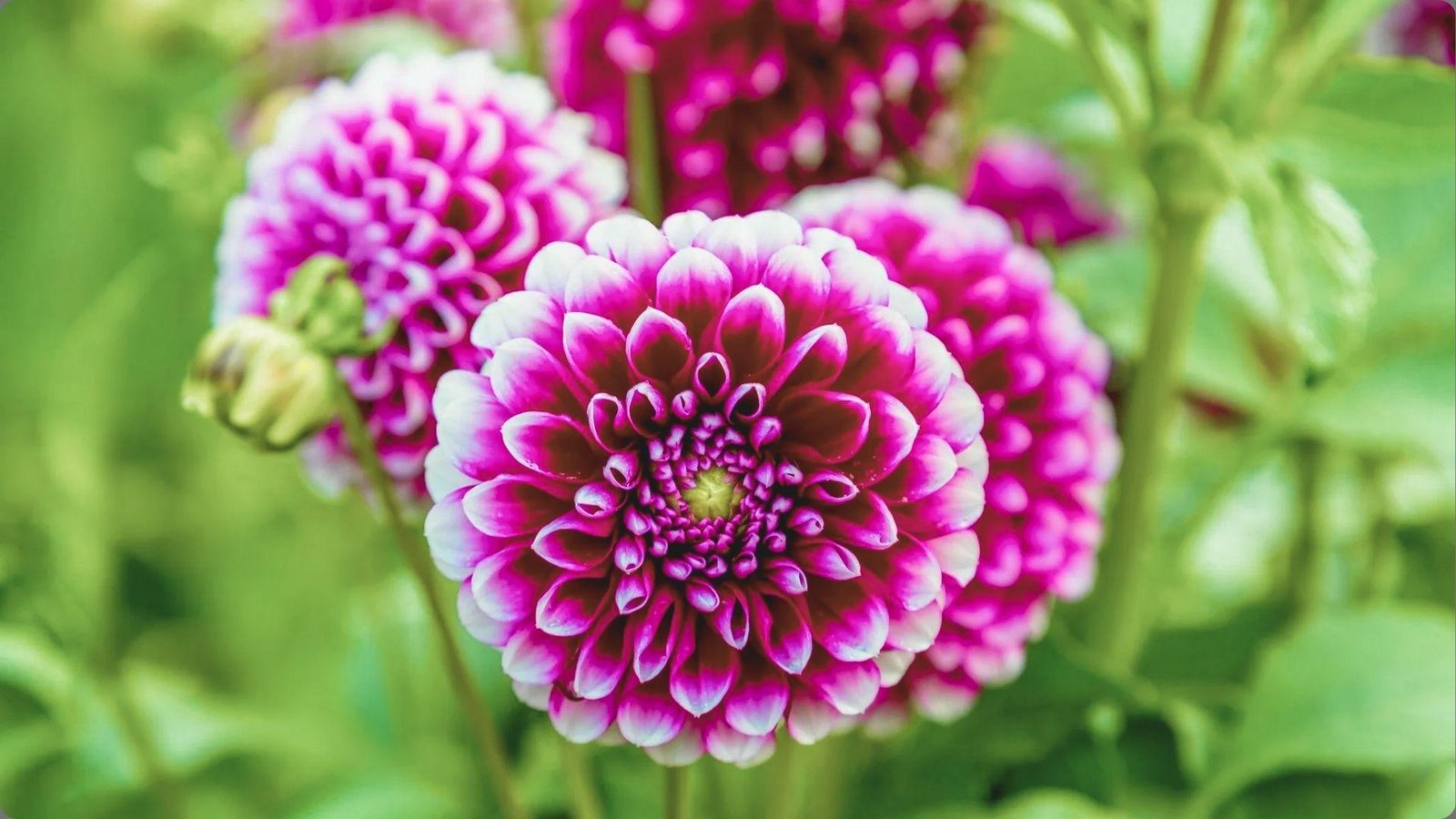
Ball dahlias are perfectly round with tightly rolled petals that curve inward. They range from small to medium in size.
Pompon dahlias are the miniature version, usually no bigger than a golf ball. Both have a very neat, uniform appearance.
Cactus and Semi-Cactus Dahlias
Cactus dahlias have long, narrow petals that roll backward and taper to a point, giving the bloom a spiky look.
Semi-cactus dahlias are similar but the petals are slightly broader at the base. Both types have a dramatic, eye-catching appearance.
Single, Peony, and Simple Dahlia Types
Single dahlias have one row of flat petals around an open central disc. They look clean and simple.
Peony dahlias have two or more rows of petals with a small open centre. Both types are popular with pollinators since the centre is easy to access.
Specialty Forms (Anemone, Collarette, Waterlily)
Anemone dahlias have a raised, pincushion-like centre surrounded by one or more rows of flat petals.
Collarette dahlias feature an inner ring of shorter petals, called a collar, sitting between the outer petals and the disc.
Waterlily dahlias have broad, slightly cupped petals that overlap neatly, giving the bloom a calm, symmetrical look similar to a water lily.
How to Identify a Dahlia in the Garden
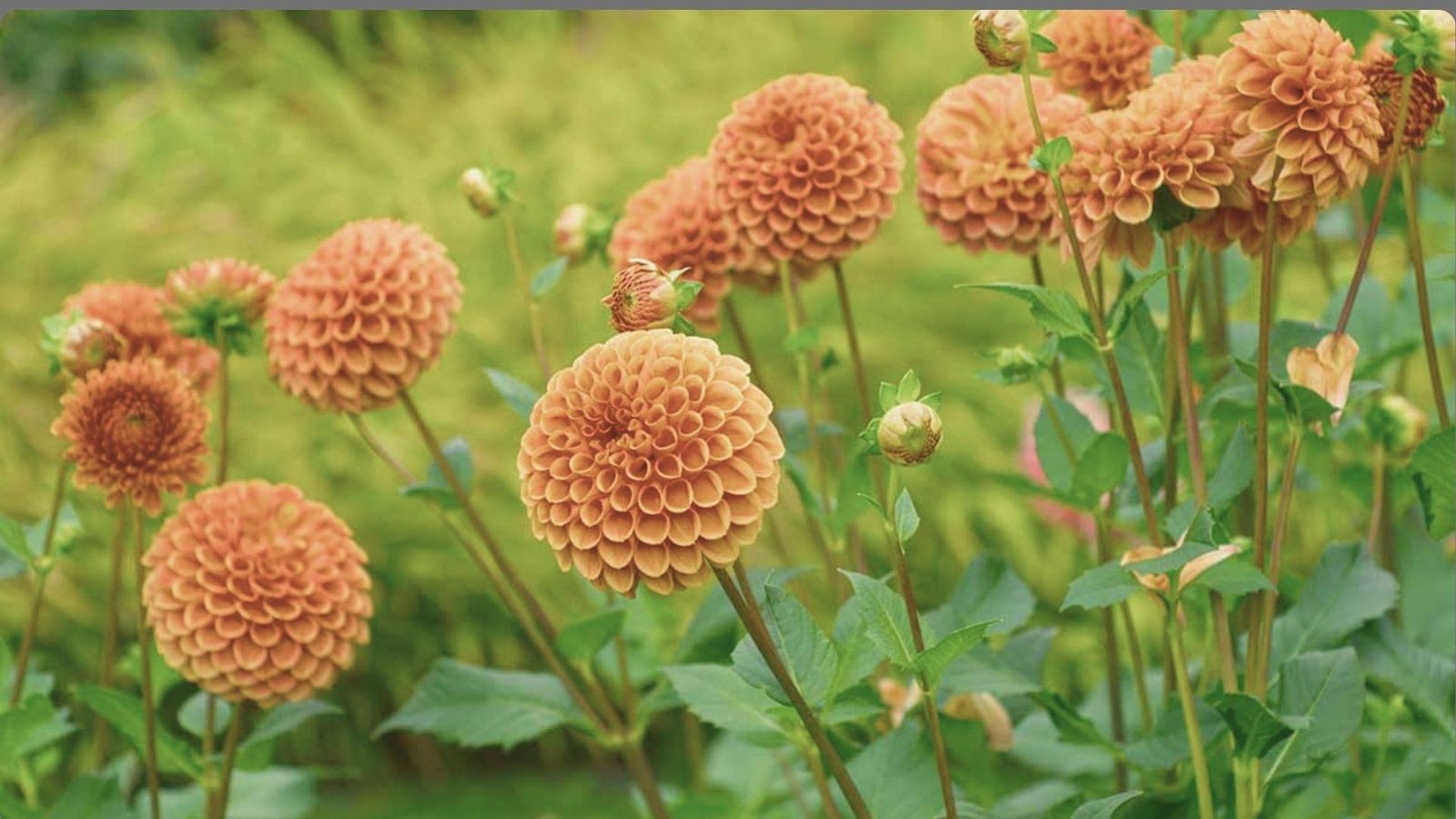
Dahlias have paired, serrated leaves growing opposite each other on thick, hollow stems. The stems feel smooth and slightly waxy. Buds start as tight, rounded clusters before opening into layered blooms.
One common mix-up is confusing dahlias with chrysanthemums, which have similar full blooms but thinner, more deeply cut leaves.
Zinnias are also mistaken for dahlias, but they are much smaller with a simpler petal structure. Checking the leaf shape and stem texture together makes identification much easier.
What Happens to Dahlias in Different Seasons?
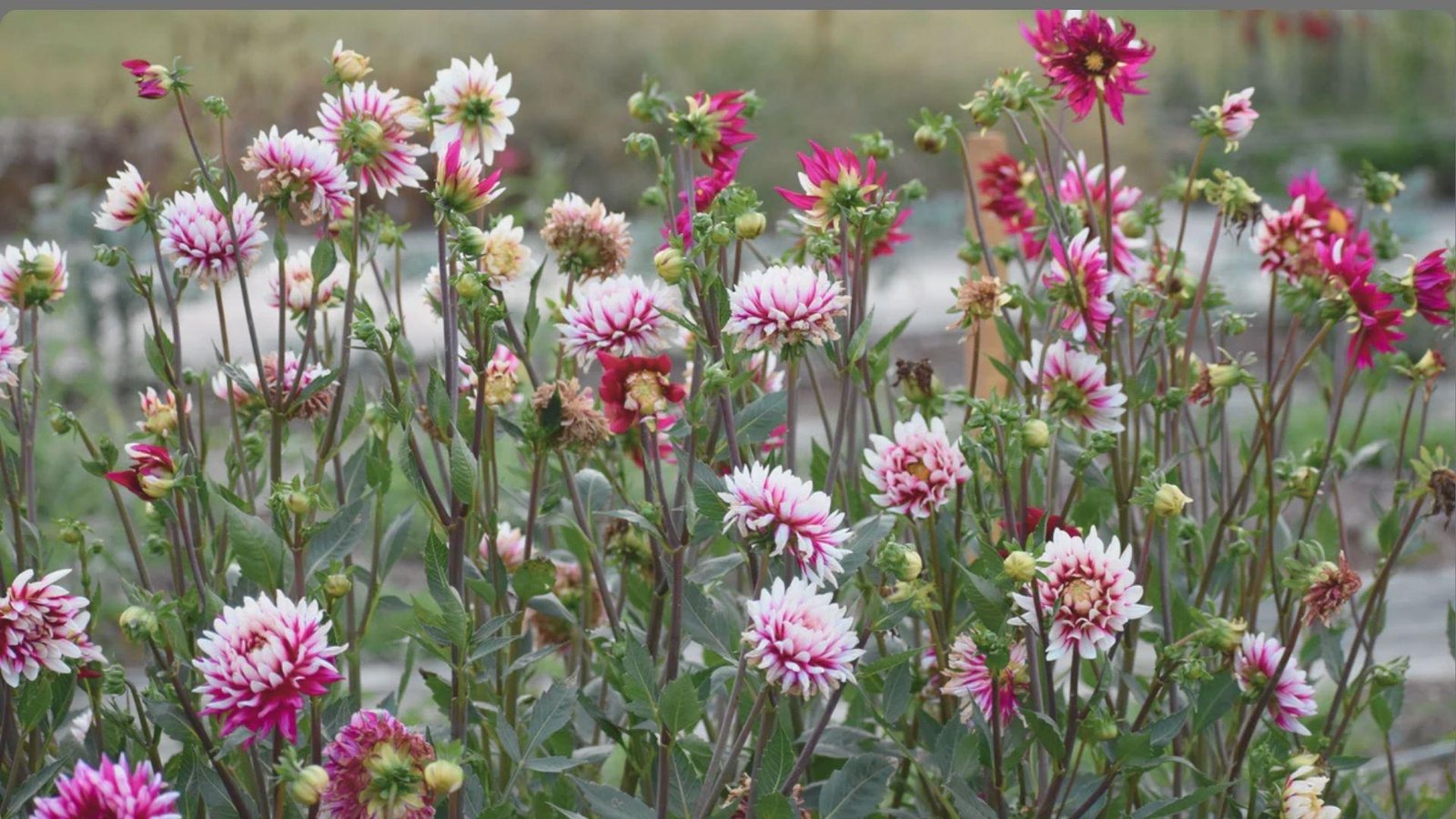
Dahlias sprout in spring as small shoots pushing through warm soil. By midsummer, the plant is full and bushy with blooms opening in waves.
This is when dahlias look their best. As fall arrives, the flowers slow down but keep blooming until the first frost hits. Frost causes the stems and leaves to turn black and collapse quickly.
The plant looks dead above ground, but the tubers below stay alive and ready to regrow the following spring.
Conclusion
Dahlias are one of those plants that genuinely reward your attention. Once you know what to look for, from the hollow stems and paired leaves to the layered blooms, spotting them becomes second nature.
They grow through every season with purpose and come back stronger each year. If you are thinking about adding dahlias to your garden, start with one variety and see how it grows.
Got questions about dahlias or want to share your experience? Drop a comment below. We would love to hear what is growing in your garden.
Frequently Asked Questions
What does a dahlia flower look like?
Dahlias have layered petals arranged around a central disc. They come in many shapes, from tight round balls to large, flat blooms up to 12 inches across.
How do I know if my plant is a dahlia?
Check for paired, serrated leaves on thick hollow stems. Dahlias also grow from fleshy tubers underground, not bulbs, which is a clear identifier.
What colors do dahlias come in?
Dahlias grow in almost every color including red, pink, yellow, white, orange, and purple. True blue is the only color dahlias do not naturally produce.
When do dahlias bloom?
Dahlias bloom from midsummer through the first frost. This long flowering period makes them one of the most reliable plants for consistent garden color.
Do dahlias come back every year?
Dahlias are not frost-hardy, so the tubers need to be dug up and stored before the ground freezes. Replanted in spring, they grow back and bloom again reliably.